
Self-Healing Integrations
Transform your integration experience with Plumbed.io's self-healing AI platform, ensuring seamless connectivity and operational excellence.
Visit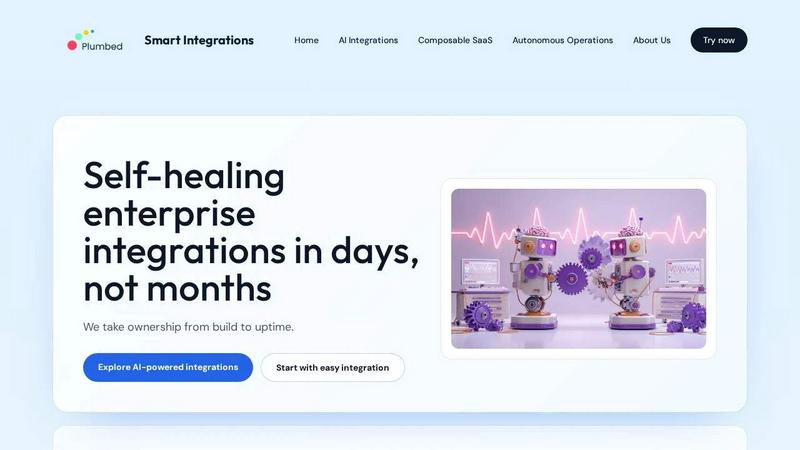
About Self-Healing Integrations
Self-Healing Integrations redefine the way enterprises manage their integration processes. Designed for organizations that rely on multiple systems, partners, and channels, this sophisticated platform from Plumbed.io automates the integration lifecycle, ensuring sustained operational excellence. Rather than merely establishing connections, Self-Healing Integrations proactively monitor and maintain these connections, reducing downtime and operational costs. With its AI-driven approach, businesses experience rapid deployment of new integrations, significantly lowering the traditional "integration tax" associated with custom projects. This product is ideal for forward-thinking enterprises aiming for seamless, reliable, and scalable integration operations that adapt effortlessly to evolving business needs.
Features of Self-Healing Integrations
Automated Lifecycle Management
Self-Healing Integrations automate the entire integration lifecycle, managing everything from initial setup to ongoing maintenance. This feature ensures that integrations remain functional and efficient over time without manual intervention.
Proactive Error Handling
Equipped with intelligent monitoring capabilities, the platform can detect and resolve errors before they impact operations. This proactive approach minimizes downtime and enhances the reliability of integrations across the organization.
Continuous System Updates
The software automatically updates integrations to accommodate changes in connected systems or new business requirements. This feature guarantees that your integrations evolve alongside your business, maintaining their effectiveness and relevance.
Cost Reduction Mechanisms
By eliminating the need for costly custom development cycles and extensive maintenance efforts, Self-Healing Integrations significantly lower operational expenses. This allows companies to allocate resources more effectively while ensuring seamless data flow.
Use Cases of Self-Healing Integrations
Streamlined Onboarding for New Partners
Organizations can onboard new partners swiftly without extensive integration delays. Self-Healing Integrations facilitate rapid deployment, allowing businesses to leverage new partnerships and revenue streams immediately.
Enhanced System Reliability for E-commerce Platforms
E-commerce platforms benefit from reliable integrations that ensure payment gateways, inventory systems, and CRM tools function seamlessly. This reliability boosts customer satisfaction and reduces cart abandonment rates.
Efficient Data Synchronization Across Departments
Companies can synchronize data across various departments effortlessly, ensuring that sales, marketing, and operations work with the most current information. This interconnectedness improves decision-making and operational efficiency.
Adaptable Integrations for Rapidly Changing Markets
In industries where market conditions shift frequently, Self-Healing Integrations provide the agility needed to adapt quickly. Businesses can modify integrations on-the-fly, ensuring they remain competitive and responsive.
Frequently Asked Questions
How does Self-Healing Integrations differ from traditional integration methods?
Self-Healing Integrations utilize AI to automate monitoring and maintenance, whereas traditional methods often require extensive manual intervention for updates and error resolution.
Can I customize my integrations with Self-Healing Integrations?
Yes, the platform allows for customization to fit specific business needs, ensuring that integrations are tailored to your operational requirements while still benefiting from automated management.
What types of systems can Self-Healing Integrations connect to?
The platform is designed to connect with a wide array of systems, including CRMs, ERPs, payment gateways, and custom applications, making it versatile for various business environments.
How quickly can I expect to implement Self-Healing Integrations?
Businesses can typically implement Self-Healing Integrations in just days, significantly faster than traditional integration projects that can take months to complete. This rapid deployment is one of the platform's key advantages.
Explore more in this category:
Similar to Self-Healing Integrations


Riff
Riff writes replies, DMs and posts with Gemini Nano inside Chrome. Runs on your computer, no account or API key.

Novastart
Apps and files on an infinite canvas where people and AI agents work together.

ChemAI Atlas
Explore AI models, agents, MCP servers, Skills, and open-source tools for chemistry. Discover practical guides and research workflow Recipes.

screenRIG
Signage and kiosk infrastructure for AI agents. Your agent publishes images, video, streams, web pages and apps to screens via one plugin.screenRIG is

Visemory
Search your local media library with natural language

Honer AI
Android AI assistant with chat, web search, photo and document analysis, and voice input.

GetYouTubeTranscript
Free YouTube transcripts on the web, a Chrome extension, and an API + MCP server so AI assistants can read YouTube.