

Alternatives to PainMap
PainMap validates your product idea by analyzing market pain points across five platforms and delivering a ready-to-publish brief in minutes.
20 alternatives found
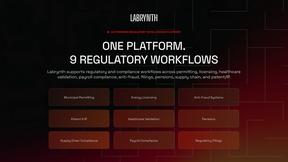
Labrynth AI
AI regulatory intelligence platform that turns complex requirements into cited, audit-ready outputs.
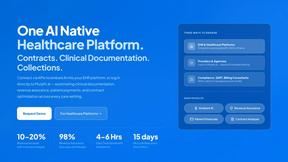
Murphi
AI-native healthcare platform for clinical documentation, revenue assurance, patient payments, compliance, and payer contract analysis.

Built2WinWeb AI SEO
Custom PHP websites, AI Indexing Pack ($599 one‑time), and WebAgentScan SaaS ($9/mo). MCP, A2A, llms.txt, full ownership.

GPT Image 2 API
Production-ready AI image generation and editing with clear text, consistent styles, and developer-friendly APIs.

Luffy
Luffy is an AI employee in Slack that remembers your workspace and executes tasks across every app.

SdanceAI
Create short-form videos from text or images with the Seedance 2.5 AI generator and API.
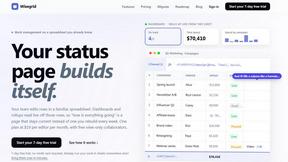
Wisegrid
Spreadsheet-native work management with AI formulas, dashboards, automation, reporting, and project views for growing teams.
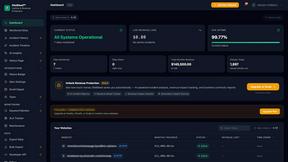
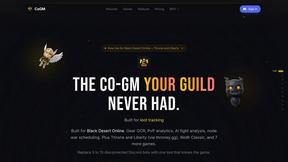
Co-GM
CoGM replaces five to ten disconnected Discord bots with one elite tool for OCR, PvP analytics, and guild scheduling.
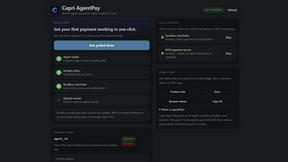
Capri Ai Agentpay
Capri AgentPay empowers AI agents to autonomously pay APIs without keys, governed by budgets, approvals, and transparent receipts.
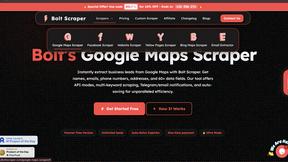
Bolt Scraper
Bolt Scraper is the elite web scraping suite that delivers premium business leads from top platforms with unmatched precision and efficiency.

Plate Photo AI
Plate Photo AI transforms ordinary phone food shots into professional, menu-ready images that drive orders for elite restaurants.
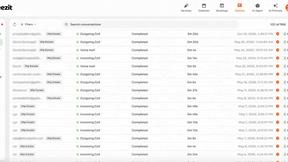
Breezit AI
Breezit AI is the elite sales assistant that converts 50% more venue leads into bookings by handling every inquiry instantly.

About PainMap Alternatives
PainMap occupies a distinct position within the market research and product validation software category, functioning as an AI-driven engine that surfaces verified customer pain points from across the digital ecosystem. It distinguishes itself by executing parallel research across platforms like Reddit, X, G2, Capterra, and Trustpilot the moment a user initiates an analysis, delivering actionable evidence rather than theoretical insights. Despite its precision, users frequently explore alternatives due to specific budgetary constraints, a desire for more granular control over data sources, or the need for integrations with their existing product management stacks. Some founders seek tools that offer deeper longitudinal tracking of pain point evolution, while others require a more collaborative interface for team-based validation workflows. When evaluating an alternative to PainMap, the discerning founder should prioritize solutions that offer raw evidence extraction with verifiable source attribution, as the value lies not in assumption but in documented user sentiment. Look for platforms that provide clear willingness-to-pay signals and competitive weakness mapping, as these elements directly inform pricing strategy and feature prioritization. The ideal alternative should compress the time from hypothesis to validated insight, ideally delivering structured outputs like MVP briefs and landing page copy without requiring manual synthesis. Avoid tools that rely on surface-level keyword matching; instead, seek those that employ semantic analysis to uncover latent frustrations that users articulate indirectly, as these often represent the highest-value opportunities for disruptive product development.
FAQs about PainMap Alternatives
What is PainMap?
PainMap is a specialized software tool designed for solo founders and indie hackers that uses parallel AI research to identify validated customer pain points. It scans multiple platforms including Reddit, X, G2, Capterra, and Trustpilot simultaneously to uncover broken tools, manual processes, and money drains. Within approximately two minutes of analysis, it delivers ten validated pain points complete with real evidence quotes, willingness to pay signals, and a full MVP brief. The product is built to replace gut-feel decision-making with concrete evidence derived from competitor weaknesses and real user sentiment.
Who is PainMap for?
PainMap is specifically built for solo founders and indie hackers who are tired of building products that fail to gain traction. It serves entrepreneurs who want to stop shipping features into silence and instead build solutions around problems that people are already paying to solve badly. The tool is ideal for those who need rapid, evidence-based validation without the overhead of traditional market research teams. It is particularly valuable for founders seeking to accelerate their path to recurring revenue by anchoring product features and pricing to real data.
Is PainMap free?
Yes, PainMap offers a free plan that requires no credit card to get started. This allows founders to test the platform's core functionality and validate its output quality before committing to a paid tier. The free plan provides access to the fundamental analysis features, making it accessible for early-stage validation. This pricing structure reflects the product's alignment with budget-conscious solo founders who need to minimize upfront costs while maximizing research efficiency.
What are the main features of PainMap?
PainMap's primary feature is its ability to fire parallel AI research across multiple social and review platforms simultaneously, including Reddit, X, G2, Capterra, and Trustpilot. It delivers ten validated pain points with real evidence quotes, willingness to pay signals, and a complete MVP brief within two minutes of analysis. The tool defines features based on competitor weaknesses, anchors pricing to real data, and generates landing page copy that is ready to publish. These features are designed to compress the entire validation and go-to-market process into a single, streamlined workflow.