Cachely
Managed remote build cache for Nx, Lerna, Turbo, Gradle, and Bazel. Reuse artifacts across CI and developer machines.
Visit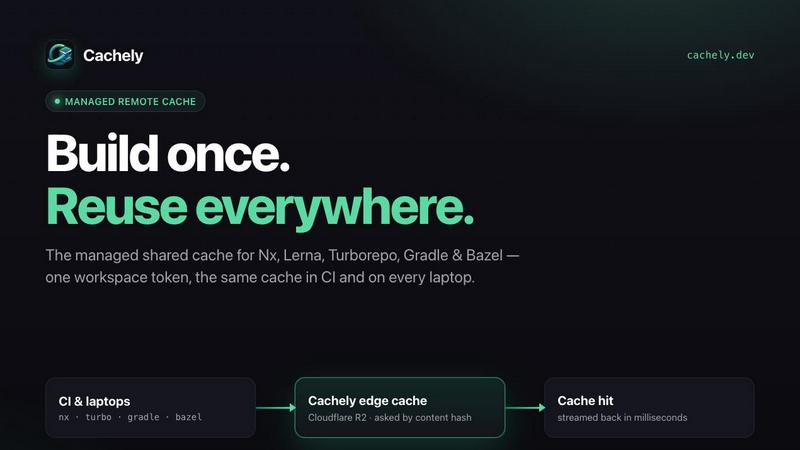
About Cachely
Cachely is the managed remote-cache backend you would otherwise build and run yourself, backed by Cloudflare R2. It supports the native cache protocols for Nx, Turborepo, Gradle, and Bazel, with Lerna using Nx's caching layer. A workspace can reuse build artifacts across CI and developer machines without a cache server or bucket to operate.
Cachely enforces read-only tokens at the API, so pull-request and fork builds can read without writing. For Nx, create-if-absent writes also prevent an existing artifact from being overwritten, addressing the CREEP cache-poisoning path (CVE-2025-36852). Cache-hit and ROI reporting estimate saved build time and cost.
Pricing has a free tier and flat, limits-based team pricing with no per-seat fee. Cachely does not clone or store source repositories; it stores task outputs and content hashes sent by the build tool. Nx, Lerna, Turborepo, Gradle, and Bazel are supported today.
Explore more in this category:
Similar to Cachely

Safe Outreach
AI-powered platform that evaluates the safety of LinkedIn automation tools and helps reduce the risk of account restrictions.

How Long How Many Tool
Timers and hourly checks to figure how out long until a certain time or how many days away.

Memorable Contact
AI-powered personal CRM that remembers where you met people and what you talked about. Save, scan, and recall contacts instantly.


ButterShare
Realtime peer-to-peer file transfer in the browser. Send files directly between devices, no account and no upload to a server.

LaunchIntel
Your AI agent picks relevant directories, submits your product in your browser and tracks every step. One-time purchase.